Showing posts with label twitter. Show all posts

Friday, July 16, 2010

5 Key Trends of 2010: Half-Year Report for The Web

An interesting article on some trends that have developed thus far this year. Which trends are you following?

It's now a little over 6 months into 2010, so a good time to reflect on the highlights of the year so far. At the beginning of the year, we identified some key trends to track: (in alphabetical order) Augmented Reality, Internet of Things, Mobile, Real-Time Web, Structured Data.

Mobile and Real-Time Web have been particularly eventful in 2010. Augmented Reality and Internet of Things are both early stage trends, but have continued to edge towards the mainstream this year. The movement towards Structured Data has made significant progress in 2010, primarily thanks to RDFa and the adoption of that Semantic Web format by Facebook, Google and other big companies.

To read the full article 5 Key Trends of 2010: Half-Year Report for The Web on Read Write Web visit:

http://www.readwriteweb.com/archives/5_key_trends_of_2010_half-year_report_for_the_web.php?utm_source=feedburner

Thursday, July 15, 2010

10 Lessons of Web Start Up

Be Narrow, Be Different, Be Casual...

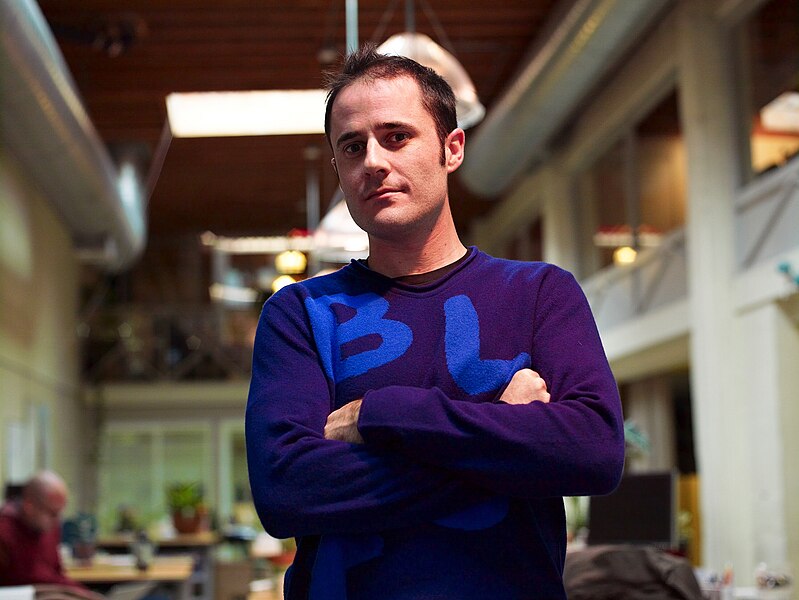
Just a few of the ten lessons that Evan Williams, creator of Blogger and Twitter, gives on Web Start Up.

#1: Be Narrow
- Focus on the smallest possible problem you could solve that would potentially be useful. Most companies start out trying to do too many things, which makes life difficult and turns you into a me-too. Focusing on a small niche has so many advantages: With much less work, you can be the best at what you do. Small things, like a microscopic world, almost always turn out to be bigger than you think when you zoom in. You can much more easily position and market yourself when more focused. And when it comes to partnering, or being acquired, there's less chance for conflict. This is all so logical and, yet, there's a resistance to focusing. I think it comes from a fear of being trivial. Just remember: If you get to be #1 in your category, but your category is too small, then you can broaden your scope—and you can do so with leverage.


For all 10 great lessons to a Successful Web Start Up read the full article:

http://davidhieatt.typepad.com/doonethingwell/2010/01/10-lessons-of-a-web-start-up.html

Monday, November 16, 2009

Twitter's Newest Feature!

by J. Butler, Content Development Specialist

Logging into the Applecore Twitter account this morning, I noticed a new addition that had popped up unexpectedly: the Lists feature.
Lists simply let you group the people you follow on Twitter into shorter, easier to follow lists. Like "Sports" "News" and "Entertainment," maybe. Or "England" "Canada" and "St. John's." Perhaps "Friends" "Family" or "Co-workers." What's more, any lists that you make or are featured on are also viewable via your profile...there's a new link next to your followers that tells you exactly how many lists you're on.

However you use it, it's sure to make the wide world of Twitter more personal and useful across the board.

Tuesday, November 10, 2009

Harvard Explores the Future of Social Media


by Jill Butler, Content Development Specialist

A remarkable social media experiment is happening on the campus of one of America’s most prestigious universities.

Harvard University has made Justice, one of the school's most popular courses, available online. Professor Michael Sandel is an internationally renowned mind, and explores political philosophy through thought-provoking topics such as same-sex marriage, civil rights and whether lying can ever be good. It’s a great way to educate Harvard students, but then, distance courses are nothing new on any university campus, even before the internet.

If the story stopped there, Applecore wouldn’t be writing a blog post about it.

Because this course isn’t only a course for Harvard students. This is available to anyone with the inclination and an Internet connection.

Each lesson—which run about 55 minutes each—has been loaded onto YouTube and posted to its website, which also features reading lists, pop quizzes and a discussion circle.

So really, it’s like you’re attending Harvard, but without paying the sizable tuition or stirring from the comfort of your own home.

What’s the Why?

My first thought when I heard about this was trying to figure out why Harvard would do this. And after much reflection, I think it can be explained in a word: exposure.

After all, the press coverage of this virtually unprecedented move by an Ivy League college has been extensive, and very positive.

But isn’t Harvard essentially trading their intellectual advantage for a couple of press releases? After all, prestige and exclusivity is what makes Harvard an impressive note on your resume, not that just anyone who’s willing to listen can benefit.

This is where the extraordinary part comes in.

Harvard Leads the Future

The Ivy League hasn’t exactly built a reputation for going with the flow. Introducing this high-production, universal course offering demonstrates that Harvard is not just some stuffy out of touch institution unable to keep up with new media and the latest technologies.

But what’s more, this website could go a long way for improving public opinion of the school, which goes a long way in a recession when many people question spending thousands more on an education which no longer guarantees success. Now, everyone can have a taste to see what all the fuss is about.

And let me tell you—this online course is not filler. It’s thought-provoking and intellectually vigorous, demanding you pay attention from the word go. It’s a great chance to see why a Harvard education is so valuable.

Where’s the Real Lesson?

But most of all, this legitimizes social media in a way that is unprecedented. YouTube isn’t just clips of animals doing funny things; Harvard University, the creme de la creme, uses it to teach its students! Comment boards aren't just a haven for slang; it can be the birthplace of carefully considered philosophical discussion!

This goes a long way in demonstrating the real future of social media. When YouTube was first introduced, did anyone really imagine that it would be adopted by a prestigious college to explore complex ideas of human development? To reach and educate a global audience?

Beyond instant messaging, Facebook pokes, or retweets, this makes it clear that the future of social media is as limitless as our imagination. Or perhaps, more accurately, our ambition.

Wednesday, September 16, 2009

Which Mayoral Candidate Gets Top Marks for Social Media?

by J. Butler, Content Development Specialist

Election fever has taken over St. John's, Newfoundland. With the St. John's mayoral election in less than two weeks' time, it seems like a great time to take a step back and assess how our local candidates are using social media to their advantage.

Let's see how the candidates for the St. John's Mayoral race shape up:

Dennis O'Keefe
Claim to Fame: As the incumbent, O'Keefe already has a significant head start over his opponents with the voters of St. John's. In addition, O'Keefe has a long record of service to the city, including a stint as a consumer advocate and tourism supporter.
On Facebook: No.
On Twitter? No.
Blog Status: None.
Personal Website: http://www.dennisokeefe.ca/
Google Results for "dennis o'keefe mayor": 70,000

Overall Social Media Grade: D+
While he does have a website, it seems mostly static and full of basic campaign rhetoric. With no Facebook, Twitter, or blog, there's no real online way to support him--voters will have to rely on the ol' standby: those annoying lawn signs.


Ron Ellsworth
Claim to Fame: City Council member since 2005 and an active member of the community.
On Facebook: Yes. His Group page, "Team Ellsworth," has 719 members and is active updated.
On Twitter: Yes.
Blog Status: No blog, but his website does feature a downloadable booklet called "The Ellsworth Essentials."
Personal Website: http://www.ronellsworth.com/
Google Results for "ron ellsworth mayor": 922,000

Overall Social Media Grade: B+
Making his campaign booklet "The Ellsworth Essentials" available for download was a great use of the wide reach of the web. His website also features a place online where interested parties can sign up for the campaign. Ellsworth is clearly making an effort, something that will surely mean come Election Day.


Mark Wilson
Claim to Fame: The lead singer for local band The Idlers, Wilson is currently trying to tap into a demographic that is often ignored in municipal elections, the young and tech-savvy.
On Facebook? Yes. His Fan Page is active and well-populated, with nearly 250 supporters. Plus, there are two unofficial groups for his campaign with 40 members between them.
On Twitter? Yes.
Blog Status: 5 posts. He's also been a popular topic on St. John's-focused SignalBlog.
Personal Website: http://www.mayormarkwilson.com/
Google Results for "mark wilson mayor": 843,000

Overall Social Media Grade: A-
His website is more or less an example in how to do social media right. From the forum to the Media sections filled with YouTube campaign clips, everything about Wilson's website is interactive and informative. He even walks voters through the steps to signing up to vote--very important when your vote may rely on young, not yet registered voters. But these social media ventures were somewhat underpopulated, with only 35 tweets and a handful of blog posts. Still, all these social media efforts are reaching out to young voters in the city--whether or not they'll show up to support him on election day is yet to be decided.

*

When you think about it, it makes sense to see more and more social media creep up into our elections: it worked beautifully in the recent American Presidential race, helping Barack Obama spread his message of change to a wide, receptive audience. Social media, after all, is about participation, and one of the chief problems plaguing voter turnouts in recent is lack of involvement. Hence, involve people online and watch them tune in to the issues and ultimately, Election Day.

Any verdict on whether or not social media will have a huge impact on the St. John's voters will have to wait until September 29th--the day of the elections. For the full, official list of candidates, visit the City of St. John's website.

Agree or disagree with the grades? Speak up in the comments!

Wednesday, July 15, 2009

Tourism: A Social Media Butterfly?

As promised, here's the Applecore article that ran in the June 2009 issue of the St. John’s Board of Trade Business News Magazine. The theme of the month was Tourism, and since that's a subject which we know well, we just had to weigh in!

Tourism: A Social Media Butterfly?

Social media – it’s a phrase that people are beginning to recognize! In fact, many people use social media every day, though they may not call it that. Social media is an umbrella term for all the technologies that allow social interaction online. In other words, it’s Facebook, Twitter, YouTube and blogs, and it may just be the best way to talk to consumers.

Social media has been an area of marketing many businesses have been more reluctant to adopt, for lots of reasons: they worry about losing control, about getting caught up, about taking on too much too fast. But it’s getting easier and more essential than ever to get involved. Otherwise, as consumers demand that companies engage in more direct interaction, we risk being left behind. A new business model is developing that gives more power to the consumer.

But it’s nothing to be afraid of! For industries like Tourism, which is not only the world’s largest industry but also a top online sector, learning how to have these conversations with travellers is crucial. The statistics are compelling: 3,000,000 messages are sent over Twitter every day, Facebook is used in over 170 countries, blogs have 346,000,000 daily readers and YouTube boasts over 100,000,000 videos. In most cases, start-up costs are minimal. With all this potential for consumer/company interaction, social media is becoming the natural, low cost platform for marketing a destination in a way that is honest, informative and transparent.

NewfoundlandLabrador.com is a great example of a tourism destination using social media. The province’s online tourism destination marketing has grown to include social media distribution channels like a YouTube channel, a Facebook page with almost 5,000 fans, a custom Twitter account, Travel Blog, a Virtual Scrapbook that features user-uploaded photos and comments/ratings.

Think of how far a good review can go when it comes to social media and trip planning! Online features like user reviews, peer to peer communication and fan comments hold a powerful influence over the average traveller. For example, a Jupiter Research study says 58% of potential travellers trust content from users, like consumer ratings or traveller reviews, for trip planning. The same study also said 36% named this user content as an influence in the final decision-making process, ahead of factors like brand awareness (21%) or even a friend’s recommendation (14%).

Beware of the “island effect”—or, letting social media platforms stand on their own with no interaction. Using social media right means connecting each channel – embedding your uploaded YouTube videos into your Facebook page, posting links to your blog on Twitter, redirecting from YouTube to your website. Each bridge you build between your “islands” makes it easier for the user to experience all your business has to offer.

So dive in—just take your social media in steps. You don’t have to master every platform at once. When it comes to social media, getting started is the hard part— riding the learning curve is fun and exciting. Remember--social media is a powerful marketing engine, but one that needs regular fuel and a willingness to learn.

Originally published in the St. John's Board of Trade's Business News Magazine, June 2009. All rights reserved.


Learn more about the St. John's Board of Trade.

Friday, June 19, 2009

That's It: The Twitter Conversation.


This brief video dives into an overview of Twitter’s birth, but what’s more interesting about this clip is how Williams expands on how Twitter is being used, in ways he never imagined when he first got the idea. Especially when he arrives at how businesses have begun to use the low-cost service:

Among the other interesting things that have cropped up is [sic] many things from businesses, from marketing and communications and predictable things to an insanely popular Korean barbecue taco truck that drives around L.A. and Twitters where it stops causing a line to form around the block.

Interesting, right? But what stands out is the subject matter of the talk: listening to Twitter users. Why is that important? Because quite frankly, that’s it: that’s the way that businesses can use Twitter to their advantage. Twitter is a conversation, one you have to learn how to have, but can benefit your business immensely.

And it does need to be learned, at this point anyway: it takes a little out of the box thinking to see how 140 word status updates can benefit your company. But here’s a great example. Applecore posted a few days ago about our friend TA Loeffler’s plan to climb Signal Hill ten times to raise awareness and funds for prostate cancer. We took that blog post and posted a link to our Twitter account. But then we took it one step further, addressing local news outlets and media personnel via their own Twitter accounts. By the end of the day, those outlets had begun to repost out initial tweet.

And voila: a press release via Twitter. It’s simple, it’s direct, and most importantly, it’s taking place in a space where people are already prepared to receive it.

Other companies use their Twitter accounts for customer service: @comcastcares (Comcast) and @SouthwestAir (Southwest Airlines) are two leaders in Twitter as CSR. They were early adopters of the trend, and have given hope and a voice to lots of customers who are frustrated with the normal route for customer service. By simply addressing the Twitter account by name (an '@' symbol plus the Twitter account name) these companies have given their customers the power to make themselves heard and leads to less frustrating and more proactive customer services, which in the end makes all parties much happier.

So that’s it: that’s the conversation that businesses should be aiming for with their customers. What are you waiting for?

Friday, June 5, 2009

June 1-7: Tourism Awareness Week!

This past week has been something that naturally catches our eye: June 1st - 7th is Tourism Awareness Week, sponsored by Hospitality Newfoundland & Labrador. Tourism is such a huge industry—not only internationally, but online as well. Not to mention that it’s always been such a vivid factor in the economy of Newfoundland & Labrador.

The week was host to many talks and seminars about the direction that the tourism industry is moving in, capped off with a luncheon on the 3rd attended by the Honourable Clyde Jackman, Minister of Tourism, Culture and Recreation. Spreading tourism awareness is an exciting topic, especially since there’s never been a better time to spark conversations about the future. The industry has been taking huge steps online, embracing social media and interactive communities.

Of course, Applecore had to get in on the action as well. We were so inspired that we've written an article on that very subject, to be published in the St. John’s Board of Trade Business News Magazine. We decided to tackle the subject of social media and why it works so well withtourism, since it’s a topic we’re exploring every day. Social media—things like Facebook, Twitter, YouTube, blogs and peer reviews—are making amazing leaps in the industry and shaping the future of how people travel.

Check back next month for full details, but here’s a teaser for now: the future of social media and tourism relies on being flexible, transparent and ready to have a conversation with potential travelers. How can you prepare?

To be continued…!

Friday, March 20, 2009

Twitter Gets Punk'd

by J. Butler, Applecore Content Development Specialist
Word leaked yesterday that Twitter, long trying to construct a workable business model, had finally developed premium accounts for their most devoted followers. The account were split into four tiers:


Sparrow ($5/month) – Users get 145 character limit, 5 extra random followers.

Dove ($15/month) – Users get 160 character limit, 25 extra random followers, 1 random celebrity follower, auto-spell check, "Fail Whale" T-shirt.

Owl ($50/month) – Users get 250 character limit, 100 extra random followers, 2 random celebrity followers, 30 minutes on recommended list, auto-spell check, "Fail Whale" hoodie.

Eagle ($250/month) – Users get 500 character limit, 1000 extra random followers, 3 celebrity followers of their choice, 5 hours on recommended list each month, Twitter Concierge for Tweeting while user is asleep or busy (and more), auto-spell check, "Fail Whale" tuxedo, custom "Fail Whale" page when service is down.


The article cited co-founder and CEO Evan Williams as saying that "Celebrities and large corporations have begun flocking to Twitter for their social media needs, and growth has accelerated. Many users have expressed willingness to pay for accounts, and now we give them that opportunity."

But for any savvy reader, it became clear by the closing paragraphs that it was all just a joke (emphasis mine):
Users in any tier will be able to purchase an EmbellishTwit add-on for $100/year, which directs tweets to a well-educated offshore employee who will embellish tweets. For example, "Just had a whole wheat bagel and coffee for breakfast," becomes "Just got in from clubbing all night and Heidi Klum is spreading brie on a baguette just flown in on the Concord for my breakfast."


Rumors of an even higher level of service the secret "Black" account, which has J. K. Rowling, Stephen King and other famous authors write your tweets have not been confirmed.

With the reports veering quickly into the ridiculous (mandatory celebrity followers?) to the unbelievable (Stephen King penning Twitter accounts?), many appreciated the humor in this look at social media gone wild.

The really remarkable thing is how people reacted to this fake announcement. It picked up speed on Twitter, with people sending out Tweets questioning the post, with many more picking up that it was a tongue-in-cheek jab at Twitter. By midday, it had 3 terms on the search.twitter.com home page.

The cherry on the story comes when Steve Case, co-founder of AOL, caught wind of the story and posted it on his Twitter account:


Brian Briggs, the original poster, was thrilled at the attention and how quickly the story caught on:

Holy crap, the co-founder of AOL, Steve Case, just tweeted today's story link. If that's really him then that's totally awesome. OK, now Kevin Rose just retweeted it, and he has over 300,000 followers. Oh, and it's on Farktoo. Yippee.

And a happy social media fable comes to a close.

Monday, February 16, 2009

The New York Times—No More?


by J. Butler, Applecore Content Development Specialist

The big news this past month was the possibility that within five to ten years, heavyweight the New York Times could either be gone or drastically altered.

Way back in the 20th century, that announcement would have been unthinkable—since 1896, the Times has been a sonic force in modern journalism. In 2002, the publication won seven Pulitzer Prizes, largely for their superhuman coverage of the September 11th attacks (the standing record had been four). But these days, suggesting the New York Times’ eventual absence from newsstands is no longer an outrageous statement—in fact, it comes off as pretty tuned in.

Back in 2008, the paper had announced plans to borrow up to $225 million against its new Manhattan offices. Then, amid reports of faltering ad revenue and circulation, January 2009 saw a 48% plunge in the Times fourth quarter earnings, blamed on the natural decrease of advertising in a weak economy.

The Times is treading waters dotted with several scandals (see Jayson Blair, a Times writer who had faked at least 36 of his stories) and controversies—like the costly 2006 re-design, which decreased page size by half an inch and slashed content, hoping to make the paper more “reader friendly.”

The paper has slowly been shifting focus to its online division, and the numbers aren't lying: there are 1.1 million daily subscribers to the print edition - and 1.5 million readers online. Arthur Sulzberger, chairman of the New York Times, has made his priorities clear: "I really don't know whether we'll be printing the Times in five years...Internet is a wonderful place to be and we're leading there."

The New York Times is a high-profile example of a shift in print media which, depending on who you ask, means one of two things: reinvention or extinction.

Worried parties turn to the Internet for the real scoop—in particular, to voices like The Media is Dying. As a Twitter feed, it’s fairly straightforward: it reports industry lay-offs, big name agency moves and closing publications. And it does all this without adding an ounce of commentary or bias, relaying only the facts.

It’s created a lot of buzz in a relatively short amount of time—over 10,000 unique subscribers since its November 2008 inception—and has spawned a sister site meant to help the recently jobless (@themediaishiring).

On paper, things certainly don’t look good for traditional print media. But as the anonymous contributors to @themediaisdying will tell you, this looming change isn’t necessarily a bad thing:


Old media is not doomed but it certainly is changing, and fast. [New] generations are growing up with a myriad of technologies and options to get their news. . . social media [allows people to] get their news faster, easier and more personalized than ever before.


After the initial growing pains, while the economy is shaky and new media finds firm footing, this change will bring positive results. As the @TheMediaisDying creators suggest, it’s a demand that traditional media step up to meet modern technology, and enter a world where the gap between consumer and producer is smaller than ever before.


Monday, February 2, 2009

The Mad Men Meet Twitter

by J. ButlerApplecore Content Development Specialist

Mad Men: it’s been called the reason for the recent pop culture fascination with (and glamorization of) the advertising business. For AMC’s critical darling Mad Men, success was slow-going, but once it came, it came fast. The show, based on the in and outs of an ad agency in the early 1960s, has been the centre of media mentions, high fashion photo spreads and near-compulsory appearances on year-end top ten lists. So it’s little surprise that that Mad Men, a smart, well-written character piece, also collected a number of devoted, very creative fans, who also happen to be very vocal.

A few die-hard fans began to create Twitter profiles (as well as advice columns) for characters on the show and assumed their identities, sending out “tweets” that closely followed the ongoing plot of the show proper. The trend took off quickly, until nearly every major (@dondraper, the office alpha male) and some very minor (@Xerox914, the office copy machine) characters had their own voice on Twitter. The tweets were all collected under one feed-aggregator, We Are Sterling Cooper (the name of the fictitious ad agency). All in all, a fairly tame way for fans to express their love of a show, and certainly not unusual in an online world where fans often have the final say.

But the really interesting part came when AMC (and their lawyers) intervened. AMC, in a knee-jerk copyright-minded reaction, moved to shut the Twitterings down, and within days, nearly all the fictitious Sterling Cooper accounts were disabled. The remaining few scrambled around the Twittersphere, sending out frantic tweets about their co-workers being "fired" and wondering how long they had left. 

Though later reports suggest that AMC had only wanted to discuss the accounts with Twitter for copyright reasons, not shut them down entirely, the effect was the same: AMC looked like the big, mean network trying to pull the plug on what had just been harmless fun.

To temper the outcry of angry fans, AMC moved to have the Twitter accounts reinstated and quickly issued a statement endorsing the trend, calling the tweets “…a great expression of the passionate fan base of Mad Men.” They even interviewed one of the original account holders (@BudMelman) for the show's official blog. The tweets gradually picked up their former activity, and built up a little community of insider interactions and conversations. 

What’s the lesson in all this? Well, if a fan/customer is engaging in your show/brand on their own time -- of their own free will -- then you should be counting your lucky stars, not rushing to stop the conversation. You’d put a halt to the kind of free, organic advertising that most marketers dream about. And worst of all, you’d end up looking the Big Bad Corporation who doesn’t understand social media or even the basic idea of fun. 

Social media isn’t a formula; it’s a flow. AMC had to learn that the hard way. 


Curious what all the fuss is about? Check out Applecore's Twitter feed. 

Tuesday, November 11, 2008

The First Interactive Election in History

With the flurry following the election results of the past week, it's no wonder that many industry insiders are pointing out the importance of social media in Barack Obama's campaign. These snapshots of social media stats, taken Nov. 3, 2008, show the figures behind each candidate's online standing:

Facebook

Obama: 2,379,102 supporters
McCain: 620,359 supporters

Obama has 380% more supporters than McCain

MySpace

Obama: Friends: 833,161
McCain: Friends: 217,811

Obama has 380% more supporters than McCain

YouTube

Obama: 1792 videos uploaded since Nov 2006, Subscribers: 114,559 (uploads about 4 a day), Channel Views: 18,413,110
McCain: 329 videos uploaded since Feb 2007 Subscribers: 28,419, (uploads about 2 a day), Channel Views: 2,032,993

Obama has 403% more subscribers than McCain
Obama has 905% more viewers than McCain

Twitter

Obama: @barackobama has 112,474 followers
McCain: @JohnMcCain (is it real?) 4,603 followers

Obama has 240 times more followers in Twitter than McCain

[Stats taken from the Web Strategy Blog by Jeremiah.]

Even just glancing at these statistics make it clear that Obama dominated the social media stratosphere. And given that the 2008 election had a record turnout, with media coverage that looked more like the Oscar pre-show, it seems clear that using this kind of platform grants access to a wide, diverse group of individuals who are ready and willing to listen.

There's a lesson about the future of interactive marketing in all this. The success of the Obama campaign, and its seamless integration of social media with other, more traditional campaign tactics, serve as a excellent reminder of the growing importance of social media, and how many companies must learn to embrace these new trends if they want to get their message heard, like Obama...or be left behind surrounded by unheard, mixed messages like McCain.